












AI Products & Platforms
AI Products That Survive Their Own Unit Economics
Wrapping a model in a web app takes a weekend. Making it a business that does not lose money per user is the actual project, and it is the one we have run four times on our own products.
What the Engagement Actually Covers
Cost per action, modelled before launch
What one user action costs in tokens, API calls and compute, and what you have to charge for it to work. We run metered credits on our own products precisely because this number moves.
Multi-tenancy and quotas
Workspaces, roles, per-plan limits and the enforcement that makes them real. Limits that are only in the pricing table are not limits.
Billing that matches usage
Subscriptions, credit packs or metered usage through Razorpay or Stripe, with the ledger, the invoices and the failure states handled.
Model routing and fallbacks
The cheapest model that does the job, a more capable one when it does not, and a path that still answers when a provider is down.
Evaluation, not vibes
A fixed test set the output is measured against, so a prompt change is a measured change rather than a hopeful one.
When to Buy This, and When Not To
This is for you if
- You have a workflow AI genuinely shortens, with a buyer for it
- You have a prototype and need the business around it
- Your AI feature is live and the bill is growing faster than revenue
This is not for you if
If the AI is a feature of an existing product rather than the product, that is AI Product Development and it is a smaller job.
Projects That Used This
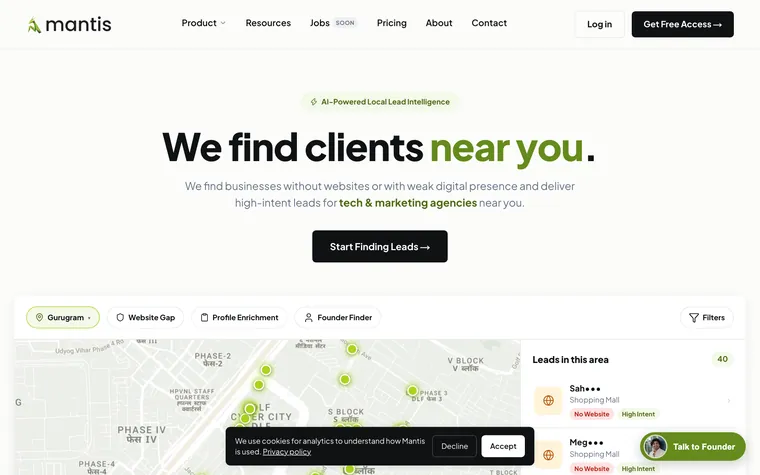
Lead intelligence
Mantis Ai
Our own product: real-time map search that finds local businesses without a website.
Read the case study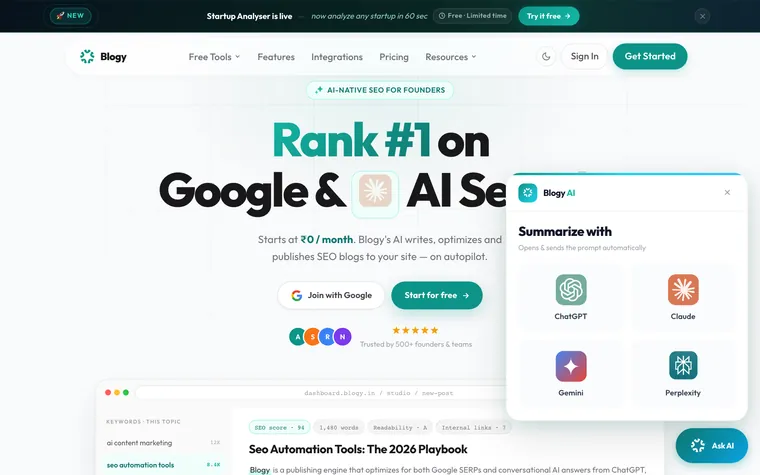
Marketing SaaS
Blogy
Our own product: connect a CMS once, and it researches, writes and schedules on its own.
Read the case study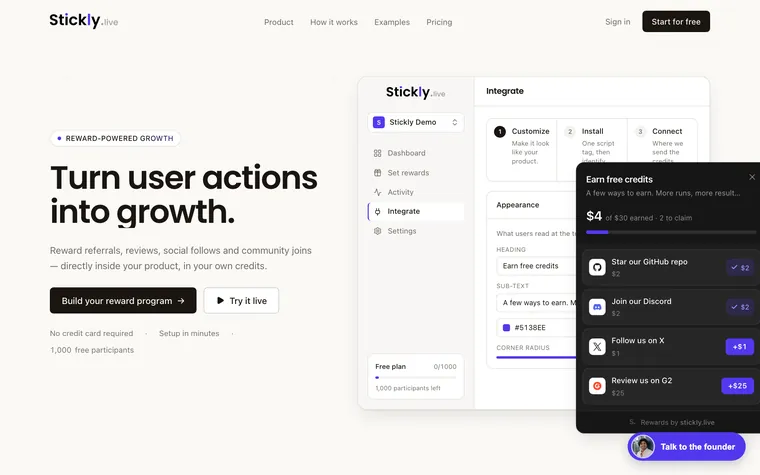
Growth infrastructure
Stickly
Our own product: rewards for referrals, reviews and follows, from one script tag.
Read the case study
What Clients Ask Before Signing
Which model providers do you work with?
Anthropic, OpenAI, Google and AWS Bedrock, behind an abstraction. On our own products we have had to switch provider mid-flight for commercial reasons, which is exactly why the abstraction is there.
How do you stop costs running away?
Hard per-plan caps enforced server-side, a credit floor below which an action is refused, caching for repeated inputs, and alerting on spend per tenant. All four, not one.
Have you actually shipped one of these?
Four. Mantis, Blogy, Stickly and Dhando are our own, all live, all paying their own infrastructure bills.
Ready to Build Something That Moves Your Business Forward?
Share your ideas and we’ll come back with a clear plan, a timeline and a price.
A focused conversation to understand your goals, challenges and opportunities.
Speak directly with our strategists and developers, no middle layers.
Get clear insights and practical recommendations with zero obligation.