












AI Voice Agent for Real Estate: Who Answers After Hours?
Say it is late on a Saturday. A buyer has been comparing projects on Dwarka Expressway for an hour, finds one in budget and calls the number on the listing. Your sales office closed hours ago. The phone rings out, and on Monday morning your team calls back a buyer who has already booked visits elsewhere.
That night call is not rare. Anarock, the real estate services firm, says its AI voice agent captured 30% of customer conversations outside business hours, driven largely by Gen-Z buyers. This post covers what an AI voice agent for real estate actually did at Anarock, what that number does and does not prove for an NCR builder or channel partner, and the setup you need before a bot picks up at night.
I'm Tarun, founder of Gigzman. We build voice bots in Gurugram, so I have a stake in this; I will keep the claims to what the sources say.
What Anarock's AI voice agent for real estate actually did
Anarock built an AI calling platform called Genie on ElevenLabs voices. According to the case study, published by ElevenLabs in June 2026:
- After hours: 30% of customer conversations were captured outside business hours. Anarock's director of AI and technology put it as "nearly 30%", particularly with Gen-Z property buyers, at times "when our human teams are offline".
- Volume: 8.5 million successful interactions in the last financial year, against 1.7 million by the human sales team in the same period.
- Capacity: calling capacity scaled 5x without a proportional increase in team size.
- Bookings: agent-assisted bookings doubled from January to May 2026, to approximately 1,400.
- Sales: ₹2,000 crore in sales attributed to agent-assisted conversations across projects.
The use cases matter more than the totals. Genie warms up new leads, re-engages cold ones, handles inbound overflow "when human sales managers are unavailable", qualifies leads from Anarock's broker network, and calls independent brokers with a live transfer to a human relationship manager when one shows interest. In every buyer-facing case the goal is the same: check fit on budget, configuration and locality, then turn the call into a confirmed site visit.
What the 30% proves, and what it does not
I like this case because it is the only public one in the search results with named numbers. Most pages ranking for this topic quote after-hours figures with no source at all. Still, read it carefully.
What it proves: at national scale, a large share of buyer conversations happen when offices are shut, and a voice agent can hold them. The 30% is conversations the agent actually had, not a survey estimate.
What it does not prove:
- That 30% of your enquiries arrive after hours. It is one company's mix across many projects and markets. A single Gurgaon project with its own ad schedule will have its own number. Measure yours first.
- That the bot alone sold anything. The ₹2,000 crore is attributed to agent-assisted conversations. Humans still ran the site visits and closed the deals.
- That it is neutral evidence. It is a vendor's customer story. That does not make it wrong, but the vendor chose what to publish.
The practical takeaway is narrower and more useful: if your phones and portal leads go unanswered after office hours, you are not seeing that demand at all. You cannot judge its size until something picks up.
Who answers your after-hours enquiries today?
For most builders and channel partners I talk to, the honest answer is "nobody until tomorrow". The failure is rarely the ad budget. It is the hand-off: the form sends an email to an inbox nobody owns, and by the time anyone calls, the buyer has seen four other properties.
| Where the enquiry arrives | What usually happens after hours | What a voice agent changes |
|---|---|---|
| Call to the number on a hoarding or listing | Rings out or reaches a guard's phone | Picks up, qualifies, books a visit or callback slot |
| Portal lead (99acres, MagicBricks) | Sits in a portal dashboard or inbox | Can be called back within minutes, if the lead reaches your system (see below) |
| Website form | Email to a shared inbox | Logged with an owner and a follow-up time |
| Broker or channel partner call | Waits for the relationship manager | Qualified, then handed to a human with a summary |
What a good after-hours call flow does
The call itself is the easy part. A flow that works for Indian property buyers does six things, in this order:
- Says it is a bot. Callers should know, because pretending damages trust the moment it slips.
- Speaks the caller's language. Hindi, Indian English and the switching between them. Accent and code-switching are where most voice deployments fail, so test on recordings of your own calls before going live. Anarock found the same thing regionally: its southern-market voice exists because local accent recognition is a prerequisite there.
- Qualifies on three things only. Budget, configuration and locality, the same three Anarock uses. Anything longer and night callers hang up.
- Ends with a commitment. A site visit slot or a named callback time, not "someone will call you".
- Hands off with context. When a human takes over, they get the summary first, so the buyer is not asked everything twice.
- Writes everything down. Recording, transcript and outcome against the contact record.
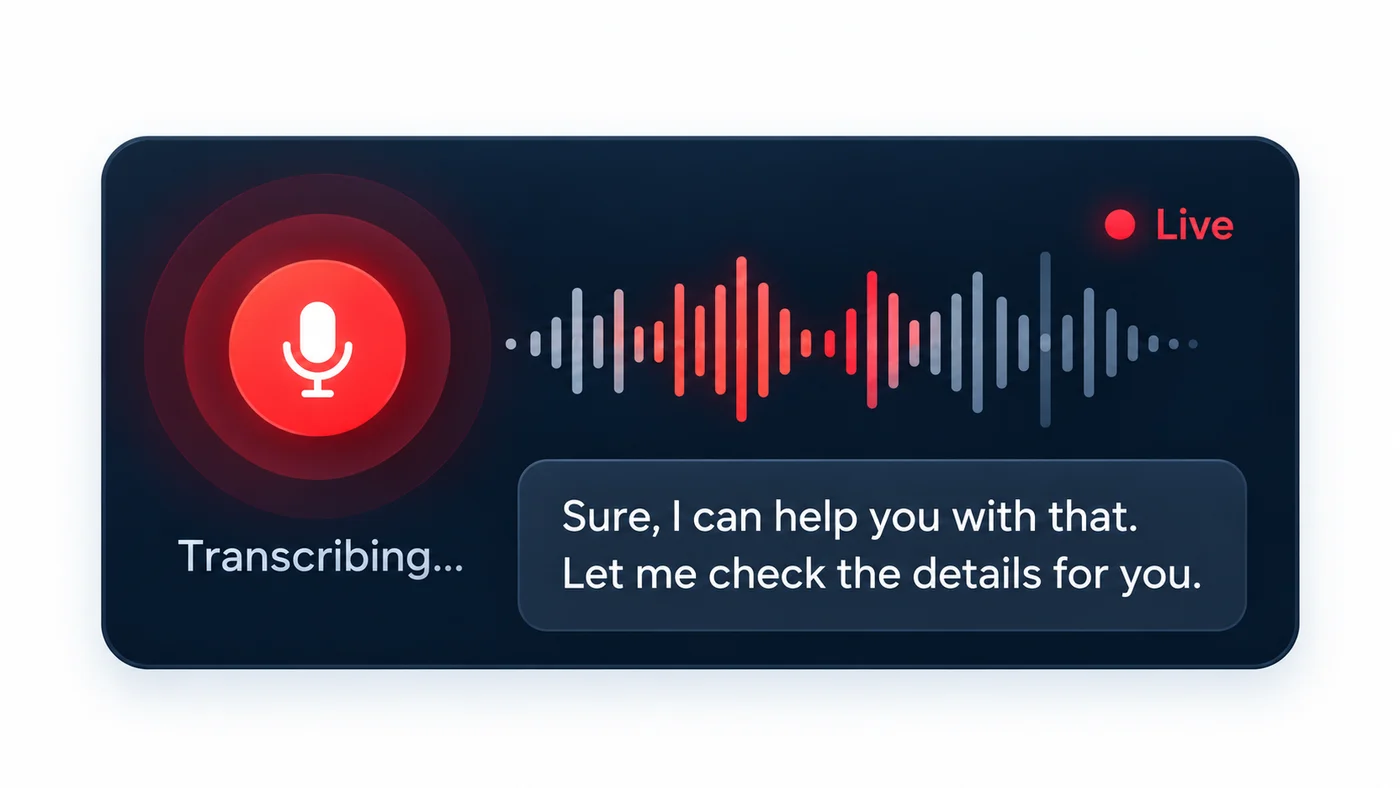
Here is the shape of a night call that does all six, in the Hinglish most NCR callers actually use:
Bot: Namaste, main is project ki AI assistant hoon. Sales team abhi offline hai, par main aapki details le sakti hoon. Aapka budget kitna hai? Caller: Dedh crore ke aas-paas, 3BHK chahiye. Bot: Theek hai. Sector ki koi preference? ... Kal subah 11 baje site visit book kar doon?
The plumbing a builder needs first
A voice agent on top of a broken lead flow just produces better-recorded lost leads. Before the bot, check these:
- Every source lands in one place. Calls, website forms, WhatsApp and portal leads in one pipeline, each with an owner and a follow-up time. Pulling portal leads back in depends on your plan with each portal, so check that before you scope anything.
- Routing by the clock. Separate business-hours, after-hours and overflow routes. Overflow matters on launch weekends, when calls spike faster than your team can answer.
- A normal phone number. WhatsApp does not expose a stable voice API for this, so use a regular number and forward from WhatsApp Business.
- Consent for outbound callbacks. Answering an inbound call is one thing; calling portal leads back is commercial communication. TRAI's 2018 regulations require consent to be explicitly recorded by a third party and activated only after the subscriber confirms. Read TRAI's notice on the regulations and get your telecom provider's view before scheduling outbound calls.
- A human on call for hot leads. Anarock live-transfers interested brokers to a person. Decide who that person is at night, or make the bot book the morning slot.
What it costs
| Item | What it costs | Note |
|---|---|---|
| Building the voice bot at Gigzman | From ₹1,00,000 | Typical timeline 4 to 8 weeks |
| Running cost per call minute | Usually ₹4 to ₹10 all-in | Depends on the provider and how much reasoning each turn needs |
| What you walk away with | A live number, documented call flow, CRM or spreadsheet integration, routing, per-minute cost reporting |
At ₹4 to ₹10 a minute, a three-minute qualification call costs roughly ₹12 to ₹30 to run. Compare that with what one missed buyer is worth to you, not with a telecaller's salary. We model the cost against your call volume before you commit.
Where the bot should stop
Not every call belongs to a bot. If calls are long, emotional or high-stakes, such as complaints or legal questions, a bot should take the message and nothing more. For a builder, that means possession disputes, payment problems and existing-customer escalations go straight to a person. The bot is for the first conversation with a new buyer, not the hard one with an existing one.
How we would build it at Gigzman
We are based in Sector 104, Gurugram, and most of our real-estate work starts with the routing rather than the bot. On JP Realtors' site, for example, every listing routes to a named agent with a phone number and a WhatsApp thread, because that is the channel their buyers use. A voice agent is the next layer on the same rule: every enquiry gets an owner, even at night.
If you are a builder or channel partner in NCR and your evenings and weekends go unanswered, tell us how your leads come in today. We will reply with a plan, a timeline and a price within two working days.
Questions people ask
Will buyers know they are talking to a bot?
They should. Our voice bots say so at the start, because pretending otherwise damages trust the moment it slips.
Can an AI voice agent handle Hindi and Hinglish calls?
Yes, if it is tested on real audio. Code-switching is where most deployments fail, so we test on recordings of your actual calls before going live.
How much does an AI voice agent for real estate cost to run?
Running costs are usually ₹4 to ₹10 a minute all-in, depending on the provider and the reasoning per turn. Building one at Gigzman starts at ₹1,00,000.
Can it answer WhatsApp calls?
Not reliably, because WhatsApp does not expose a stable voice API for this. We use a normal number and forward from WhatsApp Business.
Does a voice agent replace my sales team?
No. At Anarock it qualifies and books, then hands interested brokers to a human relationship manager. Site visits and closing stay with people.
Tell us what you are working with and we will come back with a plan.